Prelive is an AI-powered immersive language learning app designed to help people practice conversations before facing them in real life. Instead of moving through traditional lessons, learners complete practical missions inside interactive 3D environments, speak with AI characters, and build confidence through repeated practice.
Live links
My responsibilities
As Founder and Product Engineer, I work across product strategy, UX, mobile development, system architecture, AI integration, and the 3D experience.
My role has included turning user research into product requirements, designing core learning flows, defining the mission system, building the mobile experience, and coordinating the technical foundation needed to connect AI conversations, user progress, and interactive 3D environments.
Year
2025 — ongoing
Tools and technologies
- React Native
- Expo
- TypeScript
- Three.js
- Node.js
- PostgreSQL
- AI APIs (Open AI, Azure, Elevenlabs)
- Figma
- Blender
- PostHog
- Amplitude
- Sentry
- New Relic
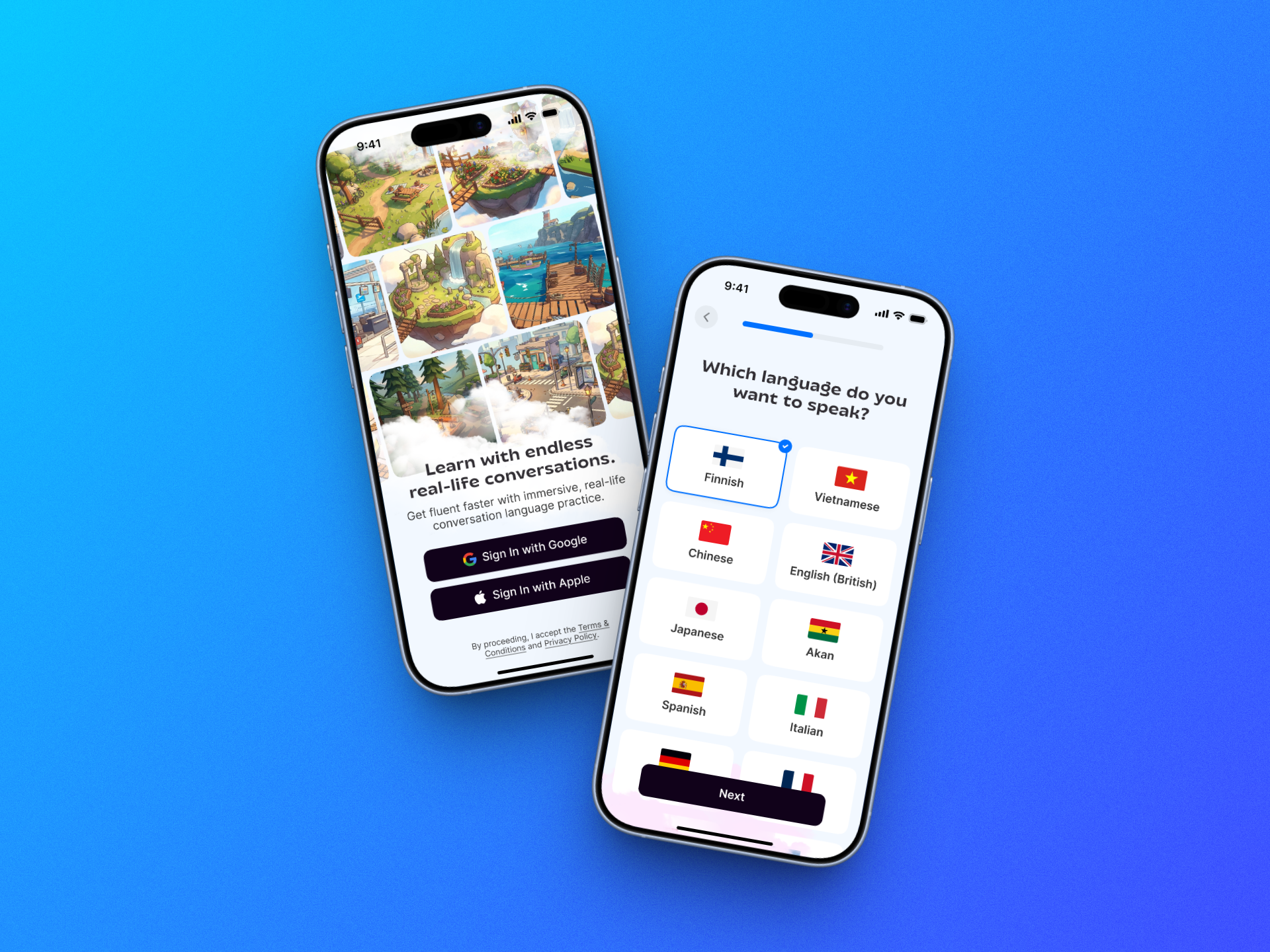
Project context and challenge
Many language learners can recognize vocabulary and understand grammar but still struggle when they need to speak spontaneously.
Our research repeatedly surfaced the same problem: learners often freeze during everyday interactions because practice tools do not recreate the pressure, unpredictability, and context of real conversations. Learners also described limited opportunities to practice safely without feeling judged.
The challenge was to create something that felt closer to actually living through a situation rather than completing another language exercise.
Project goals
- Help learners practice useful conversations in realistic situations.
- Create a safe environment where mistakes are part of the learning process.
- Connect speaking practice, feedback, repetition, and progress into one experience.
- Make an immersive 3D experience practical enough to run on mobile.
Process and key decisions
The product direction came from interviews with language learners including immigrants, international students, travelers, and people learning for work or personal development.
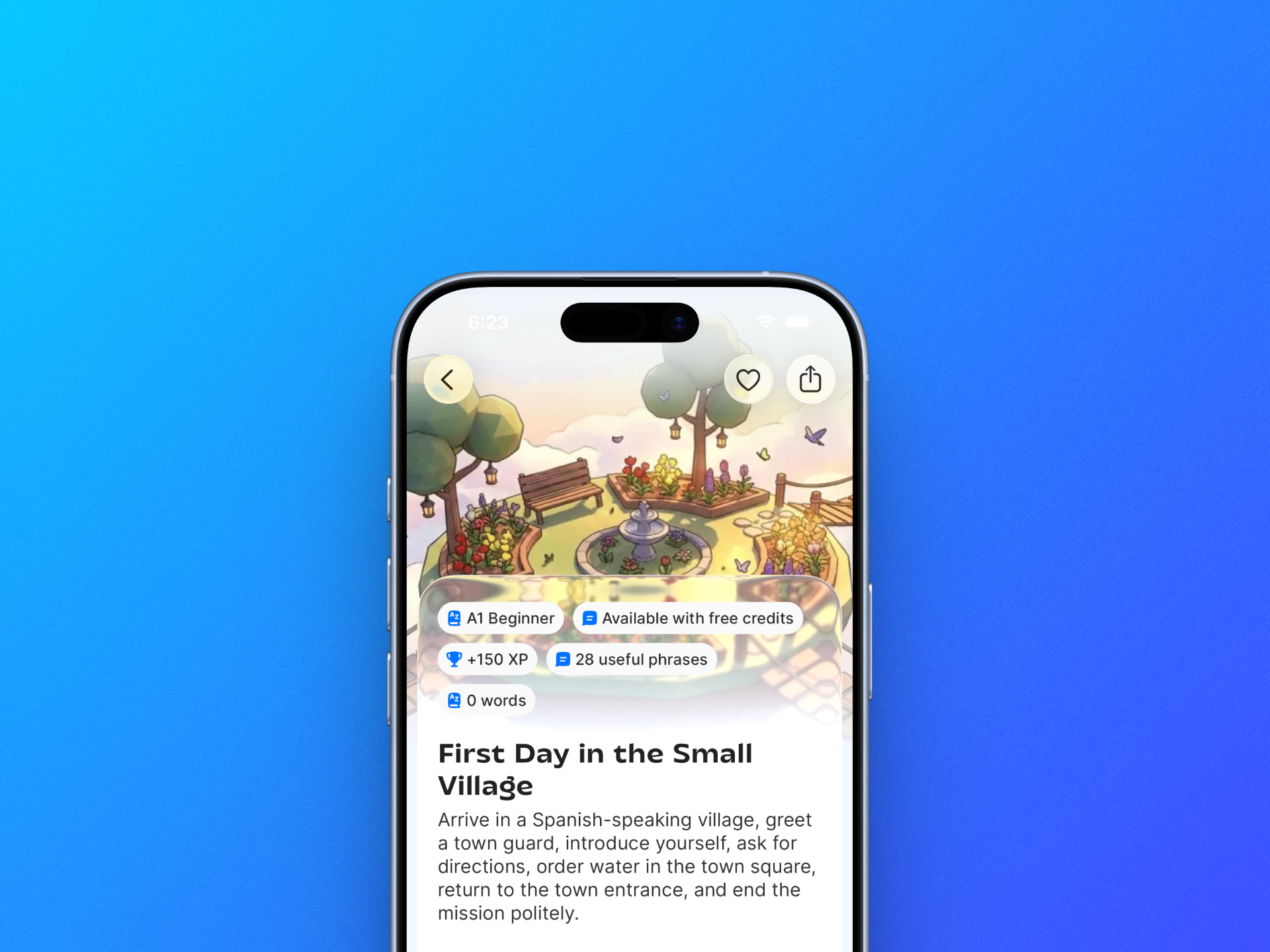
Rather than starting with lessons, I focused the experience around missions. A learner might move to a new city, meet a neighbour, find a shop, order food, or ask for directions.
This changed the central product question from:
"What should the learner study?"
to:
"What should the learner be able to do in this situation?"
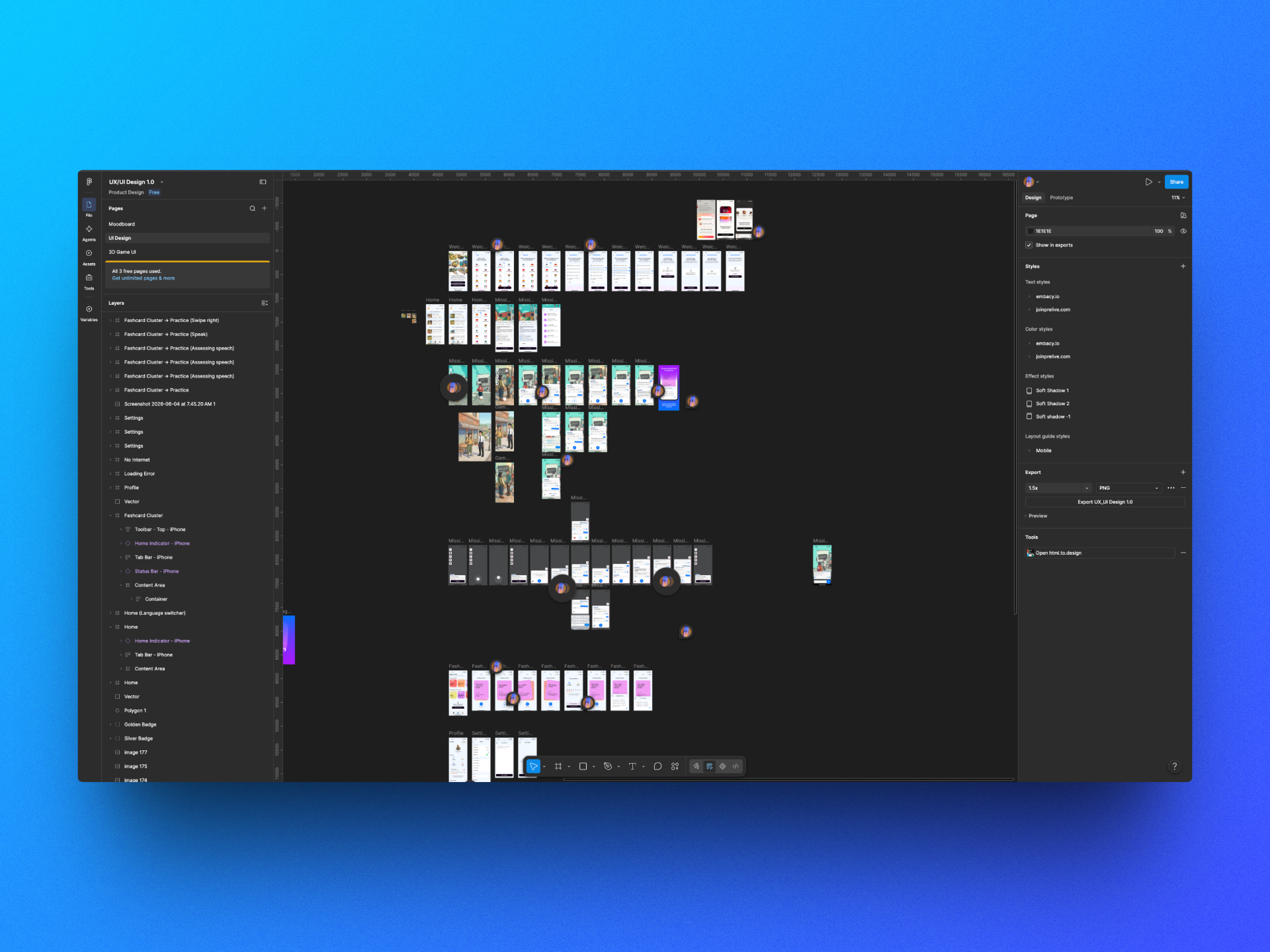
Another important decision was separating the open 3D world from structured learning progress. Users can explore naturally, while missions, objectives, and conversations provide enough structure to keep the experience focused.
Solution
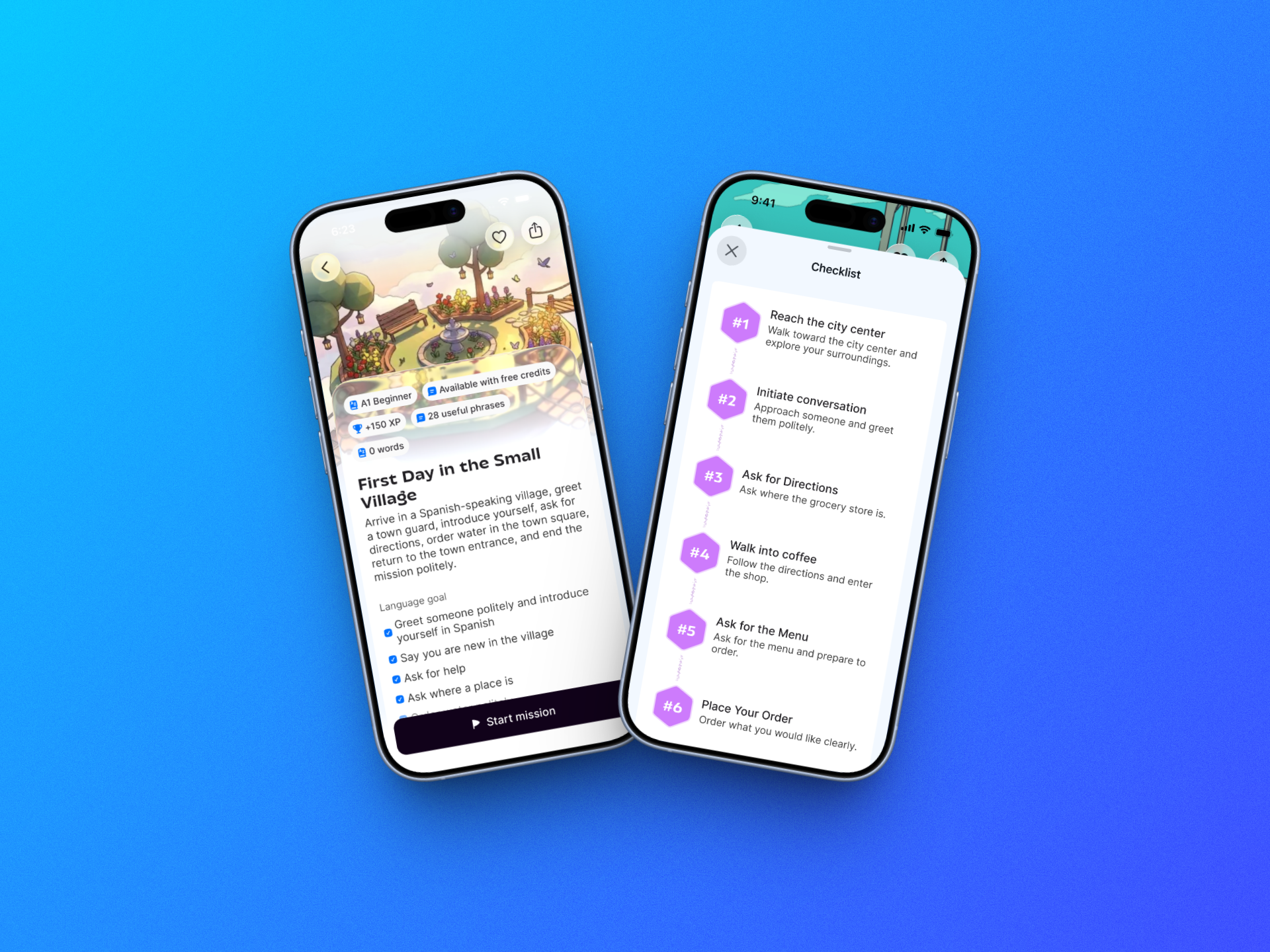
Prelive combines an explorable 3D world with mission-based learning, contextual AI conversations, speaking feedback, and post-mission review.
Story-based missions
Instead of isolated exercises, users progress through practical situations built around real-life goals.
Each mission is broken into smaller objectives so the learner always understands what they are trying to accomplish without turning the experience into a traditional lesson.
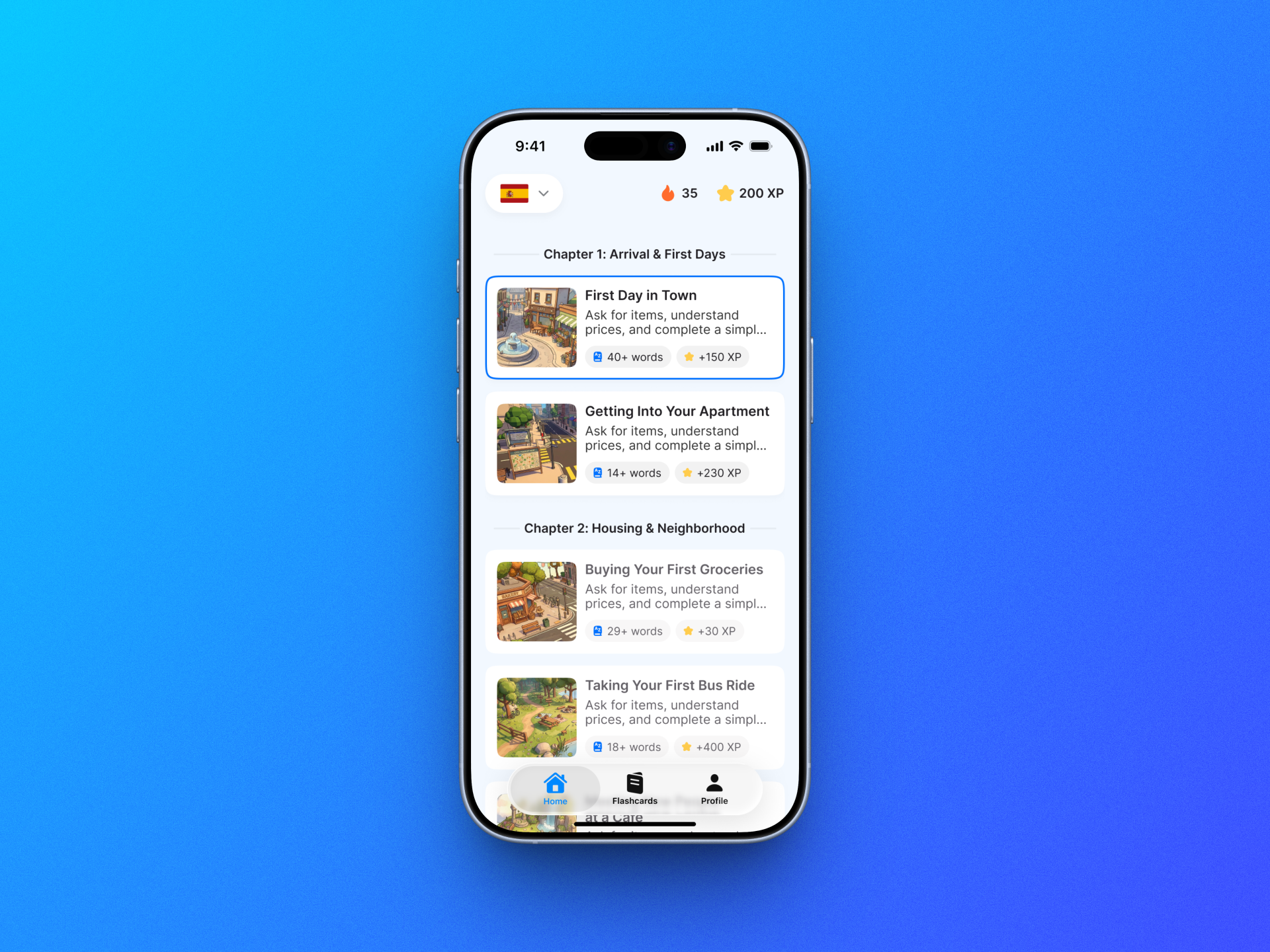
Immersive 3D practice
Users move through environments such as streets, shops, cafés, homes, and public spaces while completing their objectives.
The world is not only visual decoration. Location and interaction help provide context for what the learner is practising.
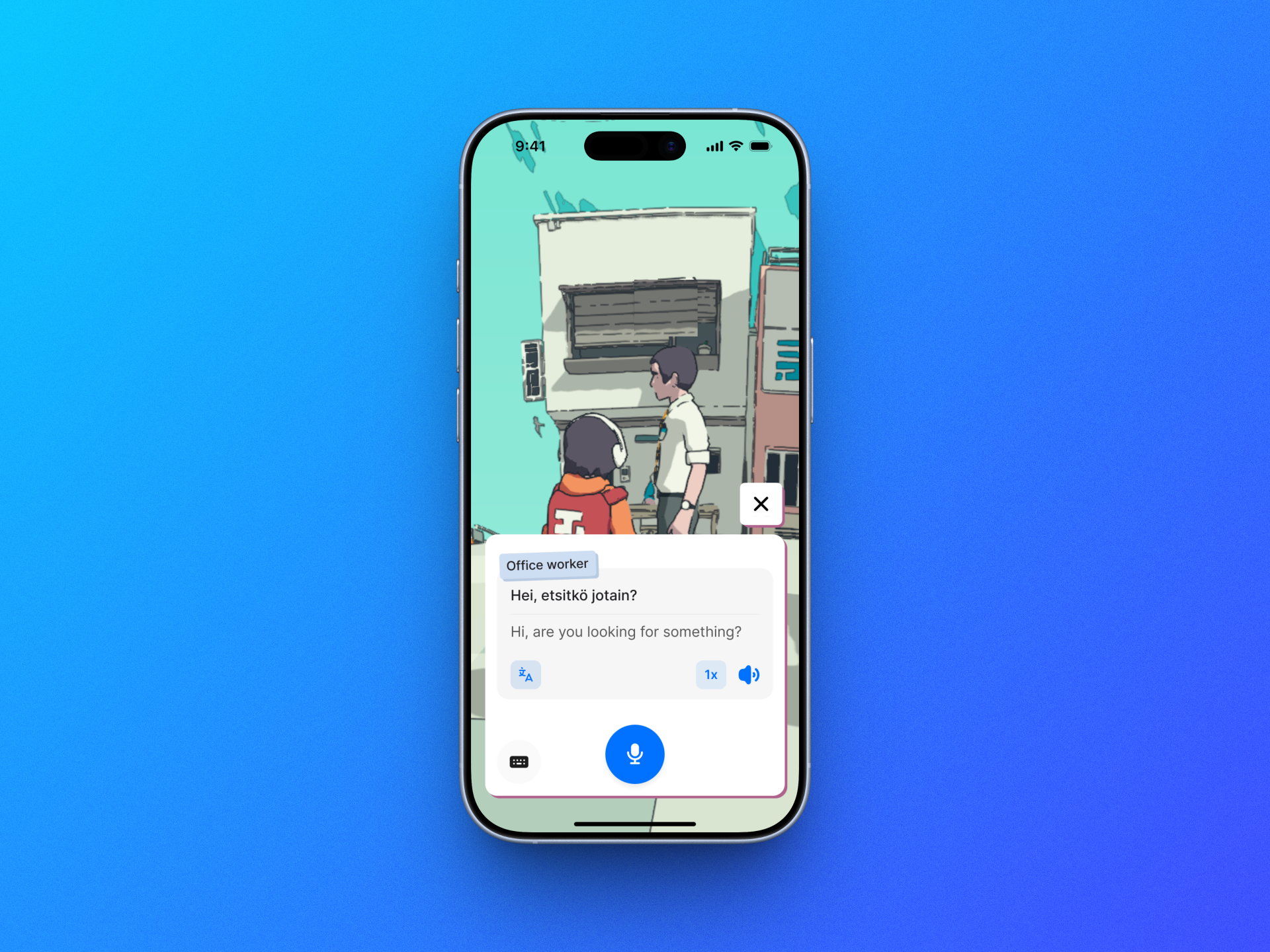
Contextual AI conversations
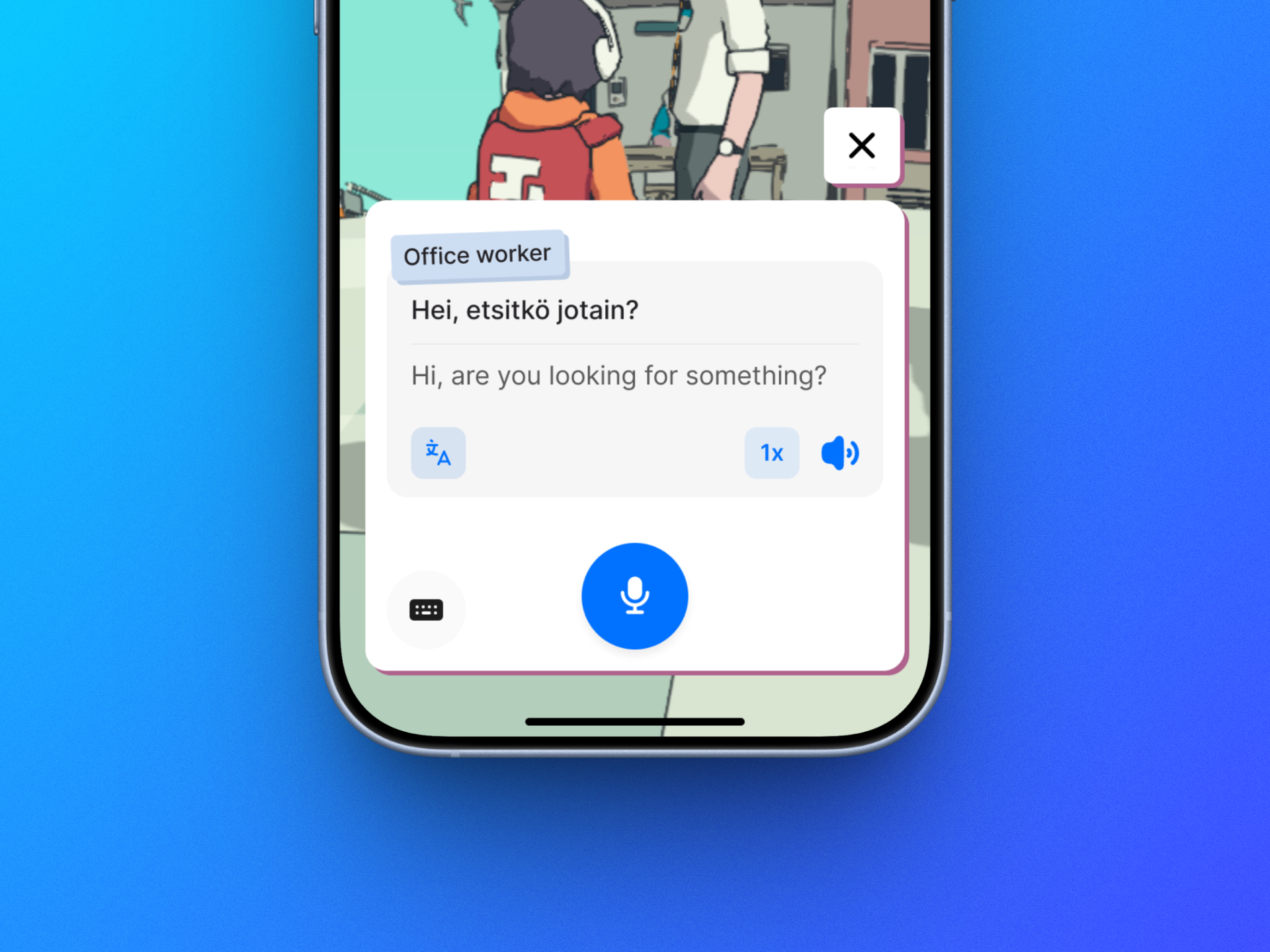
AI characters respond according to the current mission, location, learning objective, and conversation context.
I designed the system around communication goals rather than requiring users to repeat one exact sentence. This gives learners more freedom to express themselves while keeping the AI interaction focused on the intended learning outcome.
Review and reinforcement
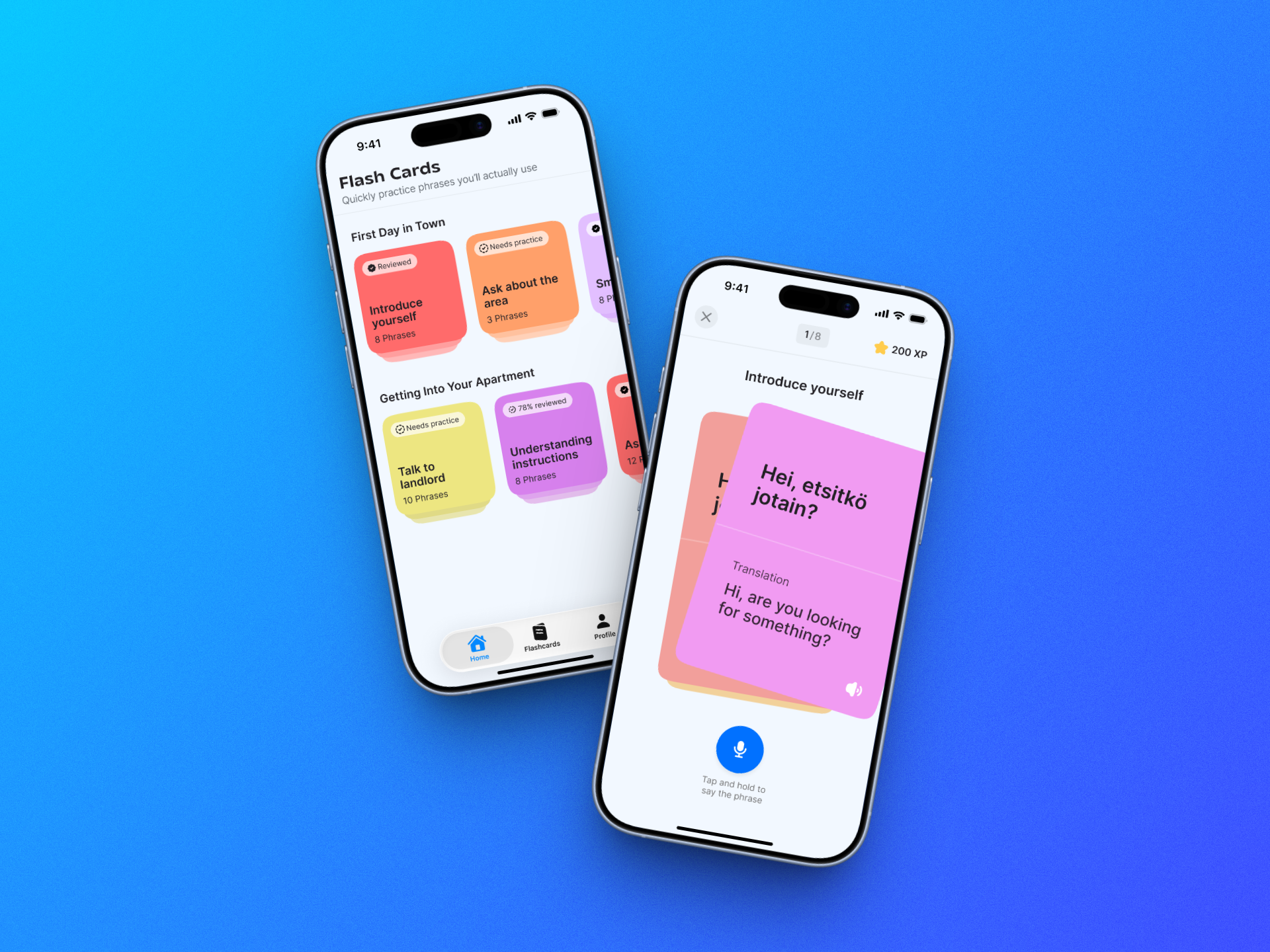
Practice continues after the conversation. The experience can surface useful phrases and areas the learner struggled with so they can review them again outside the 3D environment.
This connects immersive practice with repetition rather than treating each conversation as an isolated event.
Challenges and tradeoffs
One of the biggest challenges has been balancing immersion with mobile performance. A detailed 3D environment can become expensive quickly, so I have been developing an asset and world pipeline that allows the experience to remain visually engaging while being optimized for mobile delivery.
AI creates a different tradeoff. Conversations need to feel natural, but completely unrestricted AI can easily move away from the learning objective. The product therefore gives the AI structured mission and conversation context while still allowing the learner to respond naturally.
Scope has also been important. Rather than building many separate environments immediately, the beta focuses on creating a reusable world and mission system that can support multiple scenarios.
Validation and outcomes
User interviews helped validate that practical speaking, confidence, immediate feedback, and realistic situations were stronger needs than simply adding more vocabulary exercises.
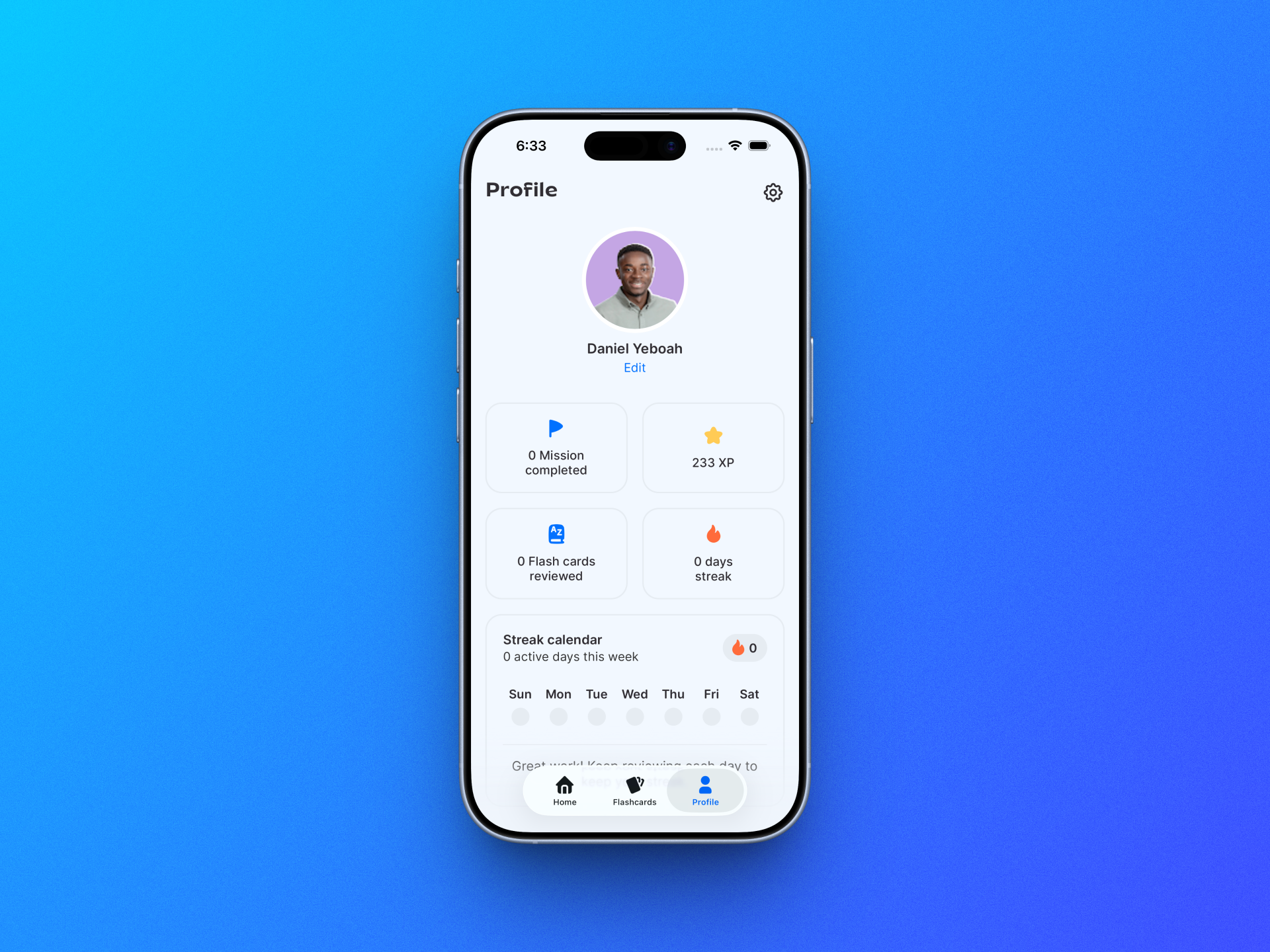
The product has since progressed into private iOS and Android testing, with the core beta focused on immersive missions, AI conversations, review, and progression.
Because Prelive is still an active product, long-term learning and retention outcomes are still being evaluated.
Learnings and next steps
Prelive has reinforced for me that technically ambitious products work best when the technology follows a very clear user problem.
The 3D world, AI conversations, voice systems, and progression mechanics are valuable because they support one central goal: helping someone feel more prepared to speak when the real conversation happens.
The next stage is focused on improving the beta experience, expanding mission content, refining conversation quality, optimizing the 3D runtime, and learning from real usage as more users practice with the product.